Top 10 CNC 5 Axis Mill Manufacturers in China
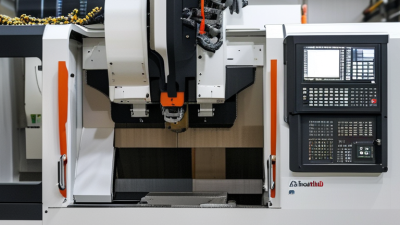
China’s five-axis machine-tool market deserves careful scrutiny, not just polished catalog photos. A Cnc 5 Axis Mill can machine several faces in one setup, helping reduce repositioning and improve access to complex contours. The practical difference appears on the shop floor: fewer fixture changes, shorter tool reach, and tighter control over multi-sided parts. But performance depends on the machine, cutting tools, programming, and operator skill working together.
The International Federation of Robotics reported 541,302 industrial robots installed worldwide in 2023, showing the scale of ongoing manufacturing automation. This is not a CNC-machine sales figure, but it provides useful context for investment in automated production. Machine-tool pioneer Joseph Whitworth is often associated with the observation, “The machine tool is the mother of all machines.” His point still resonates: a machine’s accuracy influences every part it produces.
This guide examines ten Chinese manufacturers through practical criteria: axis configuration, spindle capability, control systems, accuracy claims, service coverage, and evidence of export experience. Buyers should request test-cut results, inspect sample parts, and confirm what “five-axis” means in the quoted configuration. Names alone are not proof. Nor is a specification sheet a shop-floor trial. Some comparisons remain imperfect because manufacturers publish different test methods and service details. That gap matters. The aim here is a useful starting point, not a substitute for technical due diligence.
What Defines a CNC 5-Axis Milling Machine?
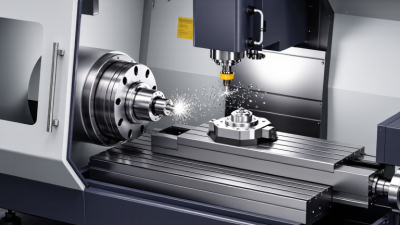
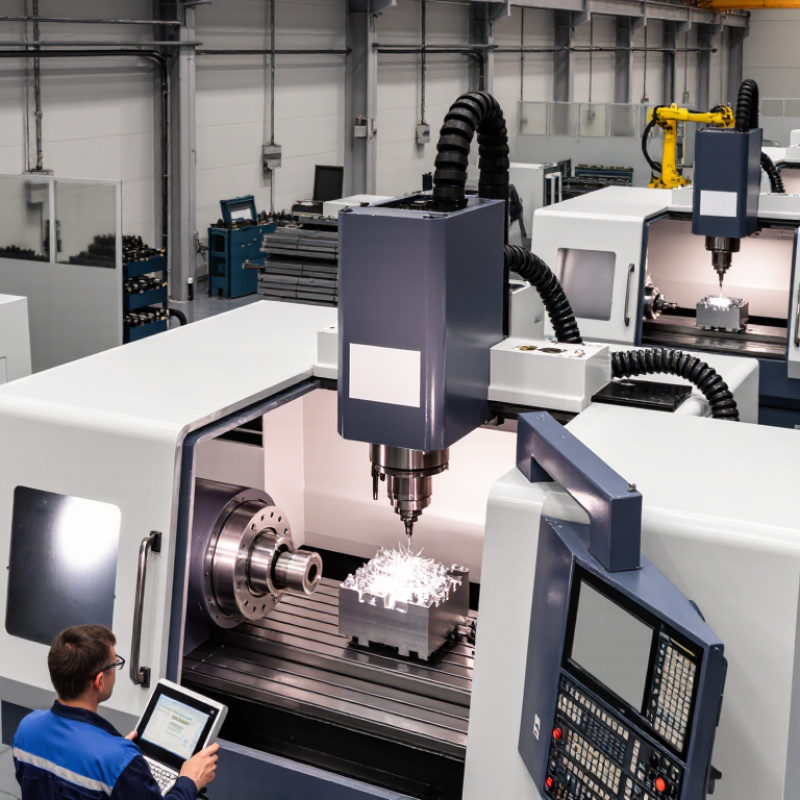
A CNC 5-axis milling machine controls three linear axes—X, Y, and Z—plus two rotary axes, commonly called A, B, or C. The extra movement tilts or turns the cutting tool or workpiece, allowing access to angled faces and curved surfaces. Five-axis does not always mean all axes move together. Some machines use 3+2 positioning: they set the rotary axes, then cut with the three linear axes. Others coordinate all five during cutting. That distinction matters.
Fewer setups can reduce repeated clamping and alignment errors. Picture a turbine-style part: several faces may be machined while it remains in one fixture. But five axes alone do not guarantee accuracy. Machine rigidity, tool length, calibration, and programming still matter; real shop-floor results can be less tidy than a brochure suggests. The International Federation of Robotics’ World Robotics 2024 report counted 541,302 industrial robot installations worldwide in 2023. This measures broad manufacturing automation, not five-axis machine sales, so it should not be read as adoption data. A useful evaluation checks the machine’s axis configuration, working envelope, and test-cut results against the actual part geometry.
How China’s 5-Axis Milling Industry Is Structured
China’s 5-axis milling industry is a layered manufacturing network, not a single group of interchangeable factories. Machine builders form one part of it, while component suppliers, control-system integrators, tooling firms, and service teams support production. Some manufacturers focus on standard machining centers. Others build customized equipment for aerospace parts, medical components, or complex molds. Their capabilities can differ sharply.
The details matter. A shop cutting a deep aluminum housing needs stable spindle performance and reliable chip removal. A supplier making precision steel components may prioritize thermal control, probing, and repeatable calibration. Buyers can assess these differences by reviewing sample parts, inspection records, machine specifications, and maintenance support. Ask how accuracy is checked after a long production run, not only during a showroom test. That question can reveal more than a polished brochure. Service capacity also varies by region, and response times may be less predictable for customized machines. The market is broad, but its structure is not always easy to read. A capability claim deserves verification.
Top 10 CNC 5-Axis Mill Manufacturers in China — How the Industry Is Structured
A five-axis milling machine coordinates three linear axes (X, Y, Z) and two rotary axes. Together, these movements let the cutting tool or workpiece reach a part from multiple angles.
This chart shows the standard axis breakdown of a five-axis machine, not manufacturer counts or market shares. China’s manufacturing ecosystem also includes machine builders, control and drive suppliers, tooling providers, and service and integration firms.
Criteria for Evaluating Chinese 5-Axis Mill Manufacturers
Evaluate a five-axis mill by evidence, not a polished brochure. Ask for recent ISO 10791 acceptance-test records and ISO 230-2 positioning results for the exact machine configuration. Check simultaneous five-axis cutting on a complex part, such as an impeller, and inspect the finished surface under consistent lighting. Request spindle thermal-stability data, tool-change repeatability, and accuracy results after warm-up. A single showroom cut proves little.
Service capability matters just as much. The 2024 World Robotics report recorded 276,288 industrial robot installations in China in 2023, about 51% of global installations. This indicates a substantial automation ecosystem, but it does not certify any mill’s accuracy.
Ask how quickly technicians respond, which critical parts are stocked locally, and whether training includes machine calibration. Get these details in writing. They are easy to overlook.
Tips: Send the same test part and acceptance criteria to every shortlisted supplier. Compare measured results, not promises. Ask to speak with a recent user, if possible, and verify the machine on site. A missed detail can still happen; record open questions before signing.
Profiles of 10 CNC 5-Axis Mill Manufacturers in China
Profile 1: One manufacturer type focuses on compact five-axis mills for small precision parts. Buyers should check working-envelope dimensions, not just machine photographs. Profile 2: Another serves mold shops, where deep cavities and smooth finishing matter. Ask for a sample cut in comparable material. Profile 3: A heavy-duty builder may prioritize rigid frames and high-load spindles. Check spindle specifications against your actual cutting tools. Profile 4: Some factories concentrate on aerospace-style components and complex toolpaths. Their application support can matter as much as machine accuracy. Profile 5: A production-oriented maker may offer automation options. Confirm that loading systems fit your floor space.
Profile 6: A precision-focused supplier may publish positioning data and test methods. Request the conditions behind those figures. Profile 7: Some manufacturers build flexible machines for varied job shops. That versatility can mean trade-offs in specialized applications. Profile 8: A maker with strong service coverage may help reduce downtime. Verify response times and spare-parts arrangements in writing. Profile 9: Export-focused factories often provide installation documents and operator training. The detail varies, so inspect sample manuals. Profile 10: Smaller producers may adapt configurations quickly, though their documentation can be uneven. That deserves a closer look. Compare test cuts, control systems, maintenance access, and support plans before choosing. A specification sheet rarely tells the whole story. Ask direct questions, and record the answers.
How to Compare Manufacturers, Machines, and Support Services
When comparing CNC five-axis mill manufacturers in China, look beyond machine price and brochure specifications. Check the working envelope against your largest part, then ask whether the machine supports simultaneous five-axis cutting. A spindle’s speed matters, but thermal stability and cutting performance over a full shift matter too. Request sample inspection reports and clarify how accuracy was measured. Numbers need context.
Tips: Ask for a live machining demonstration using material and geometry similar to your own. Confirm installation, operator training, maintenance guidance, and spare-part availability in writing. A quick service response can matter more than a small price difference.
Compare each supplier using the same checklist. Review machine configuration, controller options, safety features, lead time, warranty terms, and service coverage. Ask to speak with a current customer, if possible, and learn what happened after installation—not just during delivery. A polished presentation can still leave gaps. I would also verify that quoted accessories are included; this detail is easy to miss. Keep written answers beside each quotation, so the differences remain clear when production pressure rises.