How to Choose a CNC Machining Center for Global Sourcing?
Choosing a Cnc Machining Center for global sourcing is not simply a price comparison. It is a production decision involving accuracy, capacity, service, logistics, and long-term risk. A machine may look attractive on a supplier’s website, yet its real value appears during daily operation. Consider a factory cutting aluminum housings, titanium brackets, or hardened steel components. Spindle speed, axis travel, tool capacity, and thermal stability can affect every part.
Reliable sourcing begins with evidence. Request inspection reports, sample parts, machine specifications, maintenance records, and clear tolerance data. Ask how the supplier controls calibration and manages tool wear. A video call from the workshop can reveal practical details, such as chip evacuation, operator training, and the condition of coolant systems. These observations often matter more than polished brochures. However, no checklist removes every uncertainty. Supplier claims still require verification through trial orders, independent inspection, and documented acceptance criteria.
This guide examines how to compare machine types, suppliers, certifications, delivery terms, and after-sales support across international markets. It also considers communication barriers, spare-part availability, installation requirements, and production scalability. A low purchase price may become expensive when a replacement spindle takes months to arrive. That point is easy to overlook. Buyers should also question whether the selected machine matches actual workload, rather than an imagined future. The right choice balances measurable performance with practical support, while leaving room to improve the decision after real production feedback.
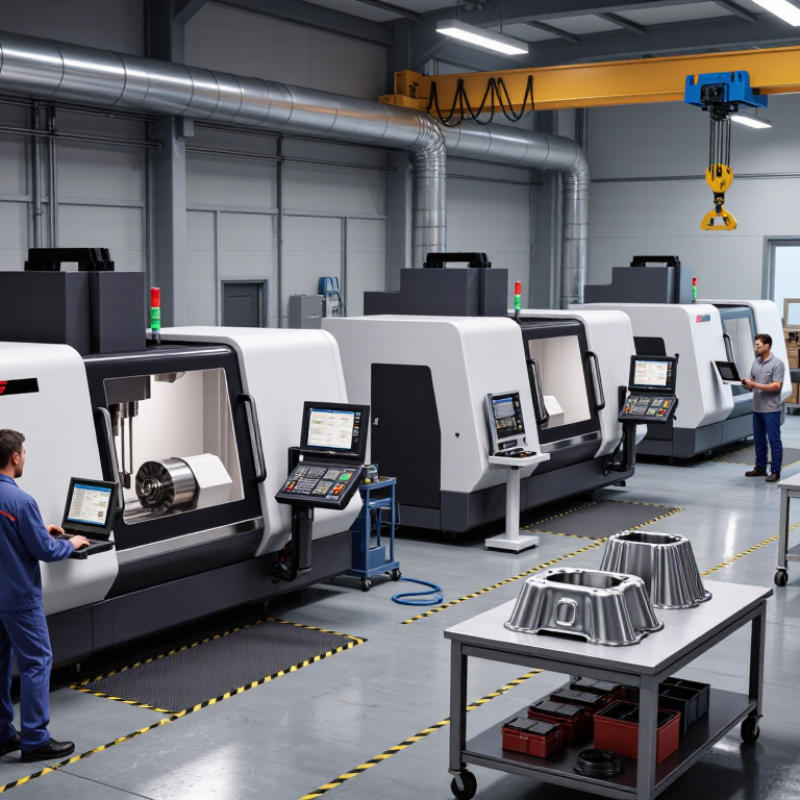
Defining CNC Machining Center Requirements for Global Sourcing
How to Choose a CNC Machining Center for Global Sourcing?
Defining CNC Machining Center Requirements for Global Sourcing
Global sourcing starts with measurable production requirements, not a machine catalogue. Record material types, maximum part dimensions, annual volume, tolerance bands, and surface-finish targets. Define the work envelope with clearance for fixtures, probes, chips, and operator access. Small omissions become expensive overseas.
In supplier evaluations, I ask how the proposed center handles your actual parts, not sample demonstrations. Check spindle speed, torque, axis travel, positioning accuracy, repeatability, tool capacity, and control compatibility. For aluminum prototypes, high-speed cutting may matter most. Steel production may require stronger torque and thermal stability. Confirm voltage, safety documentation, spare-part availability, and technician response times in the destination country.
Inspection capability deserves equal attention. Specify probing, tool measurement, temperature control, and traceable measurement reports when tolerances are tight. Ask for test cuts using your material and a representative drawing. A perfect specification rarely exists. Early volume estimates may be wrong, and suppliers can overstate capacity. I have seen buyers focus on purchase price while overlooking installation, training, freight, duties, and downtime. Build a cost model covering the machine’s first three years. Request references from comparable production environments, then verify them independently. Also clarify data handling, remote support access, acceptance criteria, and who pays when the machine fails those criteria.
Comparing Machine Types, Specifications, and Production Capabilities
Choosing a CNC machining center for global sourcing starts with production evidence, not brochure language. A three-axis vertical center suits prismatic parts, moderate volumes, and simple workholding. A horizontal center improves chip evacuation and supports multiple faces with fewer setups. Five-axis machines reduce repositioning for complex aerospace-style geometries, but programming and inspection costs rise. Mill-turn equipment can combine turning and milling, although it may be excessive for basic shafts.
Specifications should match the part family. Compare X, Y, and Z travel against the largest planned component, leaving clearance for fixtures. Spindle speed matters for aluminum, while torque matters for steel and titanium. Review spindle power, tool capacity, positional accuracy, repeatability, probing, and coolant delivery. According to Grand View Research, the global CNC machine market was valued at more than USD 80 billion in 2023, showing strong investment pressure; however, market growth does not guarantee supplier capability. Test cuts matter more.
Production capability needs measurable proof. Ask for documented cycle times, first-pass yield, inspection records, and monthly capacity by machine type. The 2024 Manufacturing Technology Orders report from AMT reported nearly USD 5 billion in U.S. manufacturing technology orders during 2023, reflecting continued automation demand. Still, bigger capacity can hide weak scheduling. I have seen suppliers quote five-axis work but outsource inspection, adding days and uncertainty. Request sample parts, CMM reports, calibration dates, and realistic lead-time data. A slightly slower center with stable repeatability may outperform a faster machine that frequently waits for skilled operators.
Evaluating Suppliers, Certifications, and Quality Control Systems
How to Choose a CNC Machining Center for Global Sourcing?
A reliable supplier should explain its machining center clearly, not only show polished photographs. Ask about spindle speed, positioning accuracy, machine age, maintenance records, and material capability. Request sample inspection reports for similar parts. A serious supplier can discuss tolerance limits, surface finish, and cycle time without guessing. I have found that detailed answers often reveal more than impressive equipment lists. Still, technical confidence is not proof of consistent production.
Certifications should support real processes. Check whether quality certificates are current, relevant, and issued by recognized independent bodies. Confirm the certificate scope, site address, and covered activities. Then examine how the supplier controls incoming materials, tool wear, first-article approval, and final inspection. Useful evidence includes calibrated equipment records, traceability labels, control plans, and nonconformance reports. Do not accept a certificate as a substitute for a factory audit. Paperwork can look perfect.
Tips: Ask for a live video walkthrough of the inspection area. Request one recent batch record, with sensitive information removed. Compare promised tolerances with actual measurement data. Clarify who approves process changes. A supplier that reports mistakes openly may be safer than one claiming zero defects. That claim deserves questions. Include inspection frequency, sampling rules, packaging checks, and corrective-action deadlines in the purchase agreement. If possible, begin with a small trial order before scaling globally. A rushed supplier decision can create hidden costs through rework, delays, and inconsistent replacement parts.
How to Choose a CNC Machining Center for Global Sourcing?
Suggested evaluation weighting for comparing suppliers, certifications, and quality control systems
Quality control capability should receive the highest weighting because process stability, inspection records, calibration, traceability, and corrective-action procedures directly affect machining consistency. Technical capability, relevant certifications such as ISO 9001, supply-chain transparency, and delivery performance should be reviewed together rather than evaluated in isolation.
Assessing Total Costs, Logistics, and Import Considerations
Choosing a CNC machining center for global sourcing requires more than comparing machine prices. Request a landed-cost worksheet. Include base equipment, options, tooling, installation, operator training, inspection, packaging, inland transport, freight, insurance, duties, taxes, and port fees. A low quotation may become expensive after voltage conversion, crating, or destination handling. Ask for energy use and maintenance intervals. These details affect five-year ownership costs, not only the purchase order.
Logistics planning should begin before selecting the supplier. Confirm machine dimensions, gross weight, lifting points, container requirements, and delivery routes. A 4.2-meter machine may need special loading or a different port. Ask who prepares export documents, serial-number lists, packing photos, and certificates of origin. Clarify Incoterms in writing. “Delivered” can hide unloading costs. It happens. Separate factory completion, sea transit, customs clearance, and inland delivery dates.
Import review needs technical and customs discipline. Verify the likely HS classification with a qualified customs professional. Then estimate duties, value-added taxes, and brokerage charges in the destination country. Confirm electrical standards, safety documents, software licensing, and local installation requirements before payment. Keep invoices, manuals, inspection records, and compliance documents. Currency changes and delayed approvals can disrupt budgets. My practical caution is simple: a perfect machine specification does not guarantee a predictable arrival. Recheck assumptions.