

Welcome to the SLMN Blog

Shandong Linmo CNC Machine Tool Equipment Co., Ltd.
Insights, Tips, and More from SLMN CNC Machine Tools

China Top 10 Horizontal Machining Center Manufacturers

China’s machining sector is shaped by automation, export demand, and increasingly complex parts. A Horizontal Machining Center can help manufacturers machine several faces in one setup, using a rotary table and pallet changer to reduce handling. The difference is visible on the shop floor: fewer manual transfers, more continuous cutting, and tighter control over repeat jobs. But those gains depend on the machine, tooling, process planning, and operator skill working together.

Industry data offers useful context, not a direct ranking. The International Federation of Robotics reported 541,302 industrial robot installations worldwide in 2023, including 276,288 in China, in World Robotics 2024. That scale reflects a strong automation environment, although robot installations do not measure machining-center sales. China Machine Tool & Tool Builders’ Association reporting provides a closer view of the domestic machine-tool industry and its development. Neither source alone identifies the “best” manufacturers.

This guide compares ten Chinese manufacturers through practical criteria: product range, spindle and axis configurations, control-system options, service coverage, and evidence of real-world applications. Specifications matter. So does the less visible support after delivery. Buyers should verify accuracy, uptime, and local maintenance capacity against their own materials and production volumes. A published rating can simplify a shortlist, but it cannot replace a factory visit or a trial cut. Rankings are editorial, not official certification—and some details may change as product lines evolve.
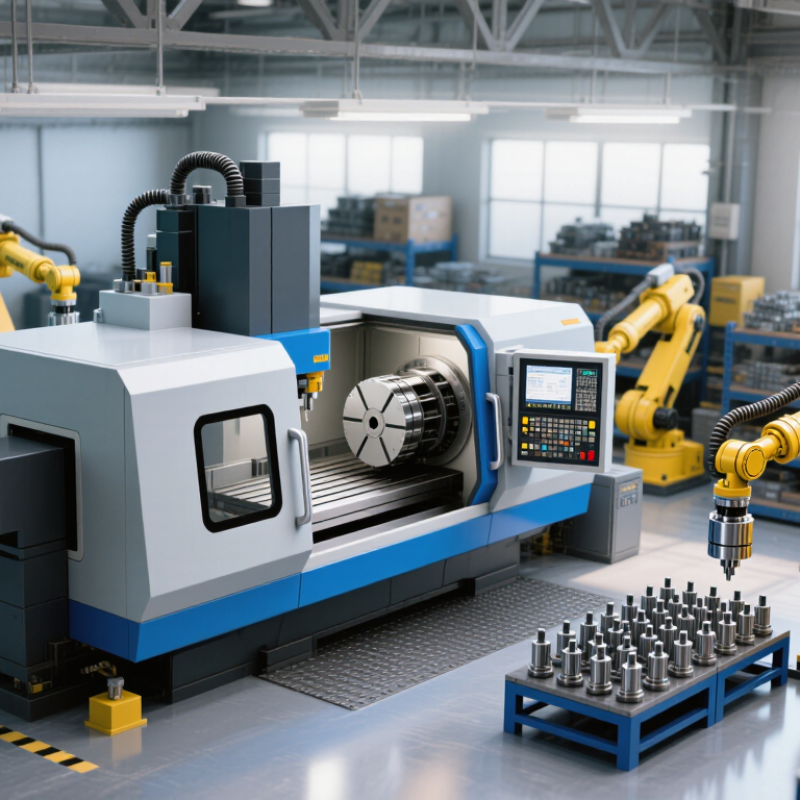
China Top 10 Horizontal Machining Center Manufacturers

Horizontal Machining Centers Explained: 4-Axis Layouts, Pallets, and Tool Changers

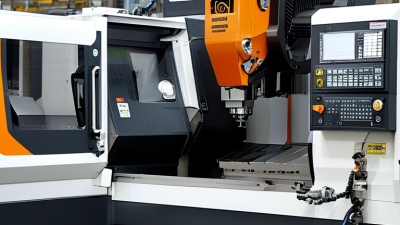
A horizontal machining center positions its spindle sideways, allowing chips to fall away from many cutting areas. A common four-axis setup combines X, Y, and Z movement with a B-axis table that rotates the workpiece. This rotation can expose several faces without manual repositioning. It is not magic; setup accuracy still matters.

Pallets hold fixtures and parts, then move between the machining zone and a loading area. While one pallet is being machined, an operator may prepare another. That can reduce idle time, especially on repeat jobs.

Tips: Check pallet seating, fixture clearance, and part alignment before starting. A small chip beneath a pallet can spoil repeatability.

Tool changers store cutting tools and load them automatically as programs call for different operations. Capacity, tool weight, and change time affect production, but a larger magazine is not always better. Too many tools can complicate setup and inventory. Match the tool list to the actual process, including drills, mills, and spare tools where needed. In practice, the best layout depends on part size, access, and batch pattern. Some shops also underestimate chip management; horizontal machines still need suitable conveyors and regular checks.
How HMC Accuracy Is Tested: ISO 10791 Standards and Positioning Metrics

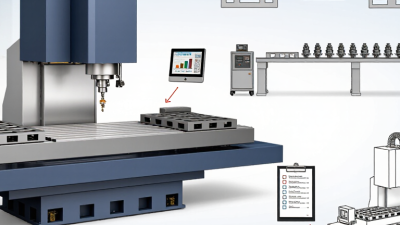
An HMC’s accuracy is not proved by a polished sample part alone. ISO 10791 provides test conditions and accuracy checks for machining centres, including geometric and axis-related performance. For axis positioning, applicable ISO 10791 requirements should be considered alongside ISO 230-2 procedures. A laser interferometer can track commanded moves along X, Y, or Z, with setup and temperature recorded. Keep conditions steady. Useful results include bidirectional positioning deviation, repeatability, and reversal error. They show whether an axis returns consistently, not whether every cut will meet tolerance.

The test should sample positions across the usable travel and approach them from both directions. Warm-up state, fixture setup, measurement alignment, and ambient temperature can change readings. Even a small alignment error can distort the result. Compare measured values with the machine’s specified limits, and retain the test report as a baseline. A strong score does not guarantee a perfect part; tool wear, cutting forces, and thermal growth still matter. That distinction is easy to overlook. For buyers comparing HMCs, request the procedure, measuring equipment details, and raw axis results, not just a certificate.

China’s Top 10 HMC Manufacturers: Company Histories and Product Portfolios

China’s top ten horizontal machining center manufacturers reflect several paths through the country’s industrial growth. Some developed from general machine-tool production, while others focused early on factory automation or heavy-duty equipment. Their histories influence what they build today. A manufacturer shaped by large-part machining may prioritize rigid beds and broad work envelopes. Another may emphasize compact layouts for crowded production floors.

Their product portfolios commonly span standard four-axis machines, pallet-changing models, and larger systems for complex components. Buyers may also find options for different spindle speeds, tool capacities, and control configurations. These details matter on the shop floor. A heavy casting feels different from a small aluminum housing, and chip clearance can affect daily uptime. The differences matter.

Company history offers context, but it is not proof of current performance. Catalogs do not always explain thermal behavior, maintenance access, or support response times. A catalog can mislead. Compare machine specifications with sample-part trials, service arrangements, and the actual workload. Even a well-established maker may not fit every production line. That part deserves honest reflection.

Comparing the Top 10: Spindle Speed, Pallet Load, Tool Capacity, and Travel

Comparing the top ten horizontal machining centers is most useful when each specification is tied to a real job. Spindle speed affects how well a machine handles different materials and cutting tools. A high maximum rpm looks impressive, but it does not tell the whole story. Check the spindle’s torque range and power, especially for heavy cuts in steel. That matters.

Pallet load determines whether a table can support a large fixture and a heavy workpiece safely. Tool capacity matters too: a larger magazine can reduce tool changes during complex jobs, but it takes space and may add cost. Numbers need context. Compare usable tool positions, not just the headline capacity, and confirm whether oversized tools limit neighboring pockets.

Travel defines the part envelope, yet the listed X, Y, and Z values do not guarantee comfortable access for every setup. Leave room for fixtures, tool length, and chip evacuation. A spreadsheet can make one machine look like the clear winner; the shop floor may disagree. I would weigh these figures against actual part drawings and cycle plans, then verify details in each manufacturer’s published specifications. One overlooked clearance can undo a careful comparison.

HMC Applications: Matching Axis Count and Workpiece Size to Production Needs

Choosing an HMC begins with the part, not the axis count. A three-axis machine can suit prismatic components with features on several faces, especially when a tombstone fixture presents them through indexing. This can reduce re-clamping and help preserve datum consistency. For angled holes or contoured surfaces, a fourth or fifth axis may reduce setups and improve tool access. Yet extra motion also brings programming, tooling, and verification demands. More axes are not automatically faster.

Size matters just as much. Compare the workpiece’s full swept envelope—not only its length and width—with table capacity, spindle clearance, and tool-change space. A 600 mm casting may need room for clamps, probes, and chip flow. Check its weight and center of gravity, too. Fit matters. A machine may accept a part on paper but leave poor access to a critical feature. Ask operators to review a representative part program and fixture model before purchase. Cycle-time estimates can be optimistic; test the hardest feature, not the easiest one. Axis choice may need revisiting after production trials.

China Top 10 Horizontal Machining Center Manufacturers - HMC Applications: Matching Axis Count and Workpiece Size to Production Needs

Application Typical Axis Configuration Indicative Workpiece Size Common HMC Setup Production Needs and Selection Considerations
Automotive transmission housings 4-axis, with a rotary table or indexing rotary axis Approximately 200–600 mm long Horizontal spindle, pallet changer, fixture access for multiple faces Suitable for repeat production of prismatic aluminum or iron castings. Check fixture clearance, chip evacuation, and cycle time across the required operations.
Engine blocks and cylinder heads 4-axis for indexed machining; 5-axis when complex angled features are needed Approximately 400–900 mm long Large-pallet HMC with rigid workholding and coolant management Confirm machine load capacity and usable travel with the fixture installed. Cast surfaces and deep cavities can make chip control and tool reach important.
Hydraulic valve bodies and manifolds 4-axis indexing Approximately 100–500 mm long Multi-face fixture, rotary indexing, optional pallet changer Good access to intersecting ports and drilled passages can reduce setups. Consider positional accuracy, probing, and methods for managing chips in intersecting bores.
Industrial pump and compressor casings 4-axis; 5-axis for compound-angle features Approximately 300–1,000 mm across HMC with a suitable rotary table, large fixture envelope, and adequate spindle torque Match the machine’s travel and table load rating to the casting and fixture together. Verify tool access to sealing faces, bores, and angled features.
Gearbox and reducer housings 4-axis indexing Approximately 200–700 mm long Horizontal machining with tombstone or dedicated multi-face fixture Often suited to machining several faces in one setup. Evaluate bore alignment requirements, fixture repeatability, and the number of part variants.
Construction equipment brackets and structural components 3-axis or 4-axis, depending on feature orientation Approximately 300–1,200 mm long Long-travel HMC with robust clamping and appropriate chip handling Large or irregular parts may require custom fixtures and careful load planning. A 4th axis can reduce repositioning when features are distributed around the part.
Rail and heavy-vehicle components 3-axis for accessible faces; 4-axis for multi-face machining Approximately 500–1,500 mm long Large-work-envelope HMC with high-capacity pallet and workholding Check axis travel, table load, and clearance for the complete workholding assembly. Long parts may need support to control vibration and maintain accuracy.
Energy equipment housings and flanges 4-axis indexing; 5-axis for complex angled surfaces Approximately 300–1,200 mm across Large-pallet HMC, rotary positioning, and tooling for deep bores Selection depends on material, part mass, bore depth, and required geometric tolerances. Confirm that the spindle, tooling, and fixture can reach all critical features.
Precision instrument and machine-tool components 4-axis; 5-axis where compound angles or fewer setups are required Approximately 100–600 mm long Thermally stable HMC with suitable probing and precision workholding Prioritize repeatability, thermal control, and measurement strategy. A higher axis count is useful only when the part geometry or setup reduction justifies it.
General subcontract machining of prismatic parts 3-axis or 4-axis; 5-axis for varied complex work Approximately 100–800 mm long Flexible palletized HMC with modular fixtures and a broad tool range Choose axis count around the recurring part mix, setup frequency, and required access. Leave allowance for fixture height, tool length, and safe tool clearance when checking workpiece size.

Note: Workpiece dimensions are indicative application ranges, not guaranteed machine capacities. Actual limits depend on axis travel, pallet or table dimensions, workpiece orientation, fixture size, total load, tool clearance, and the machine’s specific configuration. Axis-count descriptions refer to typical application setups; available simultaneous motion and indexing functions vary by machine.

  • Address

    North of Industrial Road, Linqing Economic Development Zone,Liaocheng City, Shandong Province, China

  • Email

    w.eric@lucimagnet.com

  • Phone/WhatsApp

    Eric: 0086-15688878114

Get in touch with SLMN today. Whether you have questions about our CNC machine tools , or are interested in becoming a distributor, our team is ready to assist you.

© 2025 Shandong Linmo CNC Machine tool Equipment Co.,Ltd. All Rights Reserved.

Privacy Statement Terms & Conditions Sitemap

© 2025 Shandong Linmo CNC Machine tool Equipment Co.,Ltd. All Rights Reserved.

Privacy Terms & Conditions Sitemap