Top 10 Types of 3 Axis Vertical Machining Centers
A 3 Axis Vertical Machining Center removes material along the X, Y, and Z axes, making it a practical choice for milling brackets, plates, housings, and other common parts. Yet machines in this category are not interchangeable. Spindle speed, travel, tool capacity, control features, and workholding can change how a machine performs on the shop floor. A small aluminum component may need high spindle speed; a heavy steel block needs rigidity and careful chip management. Details matter.
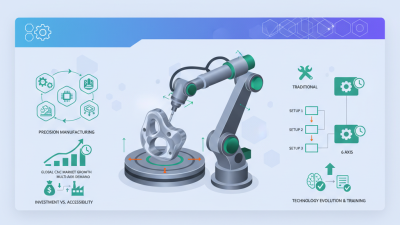
Market figures offer useful context, with limits. Grand View Research estimated the global CNC machine market at USD 83.99 billion in 2023 and projected a 9.5% compound annual growth rate from 2024 to 2030. This is a broad CNC-market estimate, not a forecast for vertical machining centers alone. Still, it reflects sustained investment in automated, precision-based production. The following guide compares ten common types of 3 Axis Vertical Machining Centers by their structure, capacity, and typical applications. It highlights practical trade-offs, from compact machines suited to short runs to heavier models built for demanding cuts. A category label alone cannot predict accuracy or uptime. Tooling, maintenance, programming, and operator skill matter too. No machine is perfect. The right choice depends on the part, the process, and the limits a shop can realistically manage.
What Defines a Three-Axis Vertical Machining Center?
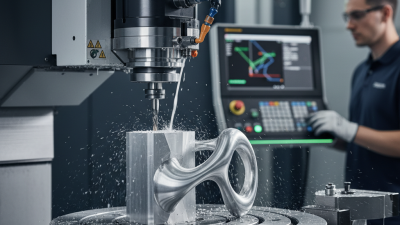
A three-axis vertical machining center is a CNC milling machine with a vertically oriented spindle and three linear directions of motion. The X and Y axes move the table or cutting tool across the work area. The Z axis moves the spindle up and down. Three directions, one setup. As the cutter rotates, the machine removes material from a secured workpiece. Operators commonly use it to machine flat surfaces, drill holes, cut slots, and produce pockets or contours.
What defines the machine is this coordinated movement, not its size or the number of tools it holds. A CNC program directs the tool along X, Y, and Z while controlling spindle speed and feed. With suitable workholding and cutting tools, one setup can complete several features. Yet the cutter approaches from above, so some angled faces or hidden features require repositioning the part. That detail is easy to underestimate. A three-axis machine can create complex-looking parts, but access still depends on setup, tool reach, and workpiece geometry. Before machining, check clearances and confirm the part is securely clamped; small setup errors can leave visible marks or inaccurate dimensions.
How the Machine’s Structure and Axes Work
Top 10 Types of 3 Axis Vertical Machining Centers
A 3-axis vertical machining center moves a cutting tool along three straight directions. The spindle points downward, while the workpiece sits on a horizontal table. X moves the table left and right; Y moves it forward and backward. Z raises or lowers the spindle relative to the workpiece. Simple to picture. Less simple to set up accurately.
Machine layouts differ in column shape, table travel, and guideway design. A rigid base and column help resist cutting forces, while ballscrews or linear drives position each axis. These parts affect accuracy, vibration, and how the machine responds during heavy cuts. A long axis travel may suit larger parts, but it can also require more floor space. It is easy to focus on travel numbers and overlook stiffness. That can be a costly planning mistake.
Tips: Check the part’s size, required reach, and fixture height before comparing machines. Leave room for tool changes and chip removal. Review the maker’s stated accuracy conditions, too; temperature and setup can affect real results.
Ten Types of Three-Axis Vertical Machining Centers
Three-axis vertical machining centers cut along the X, Y, and Z axes, making them practical for milling faces, slots, pockets, and drilled features. Ten useful types are compact, benchtop, general-purpose, high-speed, and heavy-duty machines. Compact models save floor space. Benchtop units suit small parts and light cuts. General-purpose machines handle varied production work. High-speed machines favor small tools and fine finishes. Heavy-duty models prioritize rigidity for larger cuts.
The other types are box-way, linear-guideway, open-frame, enclosed, and pallet-change machines. Box-way designs emphasize damping; linear-guideway designs support fast movement. Open-frame machines allow easier access, while enclosed models contain chips and coolant. Pallet-change systems reduce loading pauses. These labels can overlap: a heavy-duty machine may also use box ways. The International Federation of Robotics reported 4,281,585 industrial robots operating worldwide in 2023, up 10% from 2022, in World Robotics 2024. This reflects wider automation growth, not machining-center sales specifically.
Tips: Match the work envelope to the largest part, then check spindle speed, tool capacity, and chip evacuation. Ask for a cutting trial using your material. Catalog numbers can look reassuring; real cuts sometimes expose vibration or setup limits.
10 Common Types of Three-Axis Vertical Machining Centers
Indicative X-axis travel ranges for common VMC configurations
Ranges are representative, not machine specifications. Actual travel varies by model, and these categories can overlap—for example, a VMC may be both high-speed and linear-guideway.
How to Match a VMC Type to a Machining Task
Top 10 Types of 3 Axis Vertical Machining Centers: How to Match a VMC Type to a Machining Task
Choose a VMC by the part, not by spindle speed alone. A compact machine suits small brackets and short runs. A high-speed model can help with aluminum housings, where smooth finishes and quick tool changes matter. For steel blocks or repeated heavy cuts, prioritize spindle torque, machine rigidity, and thermal stability. Box-way designs often favor stiffness; linear-guide designs commonly support faster movement. Check the actual work envelope against the part, fixture, and tool clearance. A large table is no help if the spindle cannot reach the far edge. Three axes also mean some faces require manual repositioning.
Deloitte and MAPI’s 2023 smart-manufacturing survey reported that 86% of manufacturers viewed smart-factory solutions as important to competitiveness over the next five years. That is a broad industry signal, not proof that every shop needs automation. Still, compatible probing, tool monitoring, and data access can make a VMC easier to manage as production changes. I would compare these options only after confirming the cutting task, tolerance, batch size, and available floor space. It is easy to overbuy.
Tips: Test a representative part or cutting sample. Record cycle time, finish, and tool wear. Ask whether the machine holds tolerance after warming up. Specs can look convincing; the first trial may tell a different story.