How to Choose the Best 4 Axis CNC Vertical Machining Center for Your Needs
In the modern manufacturing landscape, the demand for precision and efficiency has led to the widespread adoption of advanced machining technologies. Among these, the 4 Axis CNC Vertical Machining Center has emerged as a pivotal tool, enabling manufacturers to achieve intricate designs and high-quality output with remarkable efficiency. According to a recent report by Market Research Future, the global CNC machining market is expected to reach $100 billion by 2025, underscoring the growing importance of these technologies in various industries, including aerospace, automotive, and medical device manufacturing.
Renowned industry expert Dr. Emily Chen, a leading figure in CNC technology, emphasizes, "Investing in the right 4 Axis CNC Vertical Machining Center is crucial for manufacturers looking to enhance their competitiveness and innovation." This statement highlights the necessity of understanding specific operational requirements and aligning them with the capabilities of different CNC machines. With the ability to perform complex machining operations in a single setup, the 4 Axis CNC Vertical Machining Center offers a unique advantage that can streamline production processes and reduce lead times.
As businesses navigate the complexities of machine selection amid evolving manufacturing demands, understanding how to choose the best 4 Axis CNC Vertical Machining Center tailored to specific needs becomes imperative. This guide aims to provide insights into the critical factors that influence decision-making in procuring these sophisticated machines.
Understanding 4 Axis CNC Vertical Machining Centers
Understanding 4 Axis CNC Vertical Machining Centers
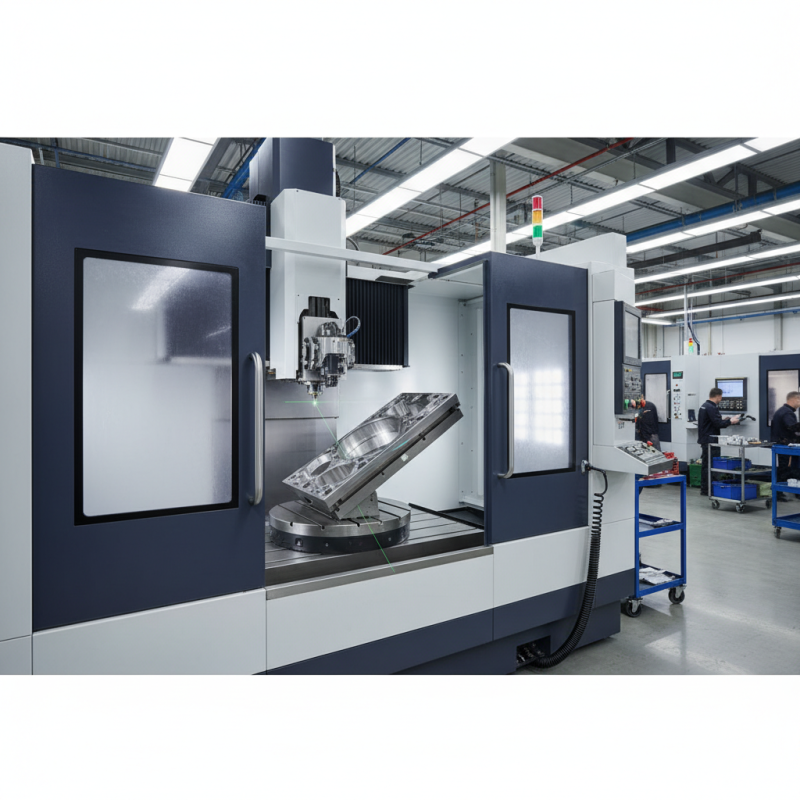
In today's competitive manufacturing landscape, 4 axis CNC vertical machining centers play a crucial role in enhancing production efficiency and precision. Unlike traditional 3-axis machines that are limited to linear movements, 4 axis systems add an additional rotational axis, allowing the tool to approach workpieces from multiple angles. This capability not only increases the complexity of parts that can be machined but also reduces setup time by allowing multiple sides of a part to be machined in a single operation. According to a report by the International Federation of Robotics, the adoption of advanced CNC technology, including 4-axis machining, is expected to grow by 20% annually, highlighting its significance in modern manufacturing.
When selecting the right 4 axis CNC machine for your needs, consider factors such as precision, speed, and material compatibility. One tip is to look for a machine that offers a balance between high-speed machining and the capability to handle diverse materials, from aluminum to harder metals. Additionally, ensure that the machine's software is compatible with your existing programming tools, as user-friendly interfaces can significantly cut down on training time and operational hiccups.
Another important consideration is machine construction and rigidity. A well-built machine minimizes vibrations, leading to improved surface finishes and dimensional accuracy. Industry data suggests that investing in higher quality components can yield a return on investment through reduced maintenance costs and increased uptime. Aim to gather user experiences and machine reviews to guide your decision, ensuring you choose a center that meets your specific production requirements effectively.
Key Features to Consider in a Machining Center
When selecting the best 4-axis CNC vertical machining center, several key features must be taken into account to meet specific operational needs effectively. One crucial aspect is the machine’s spindle speed, which typically ranges between 10,000 to 30,000 RPM for modern machining centers. A higher spindle speed allows for faster material removal rates, thereby increasing productivity. According to a recent industry report, machines with advanced spindle technologies have demonstrated up to 20% improvements in manufacturing efficiency, making them essential for high-demand production environments.
Another vital feature to consider is the machine's work envelope, including both the travel distance and table size. A larger work envelope accommodates bigger parts and complex geometries, which is increasingly important as industries push for more intricate designs. Data indicate that investing in machines with superior work envelopes can lead to a 15% reduction in cycle time due to fewer set-up changes. Additionally, the control system of the CNC machining center plays a significant role. Advanced control systems equipped with intuitive interfaces significantly reduce the learning curve, increasing the accuracy and speed of machining operations. Industry surveys reflect that nearly 60% of manufacturers prioritize user-friendly controls to enhance operational efficiency and reduce downtime.
Assessing Your Production Needs and Capacity
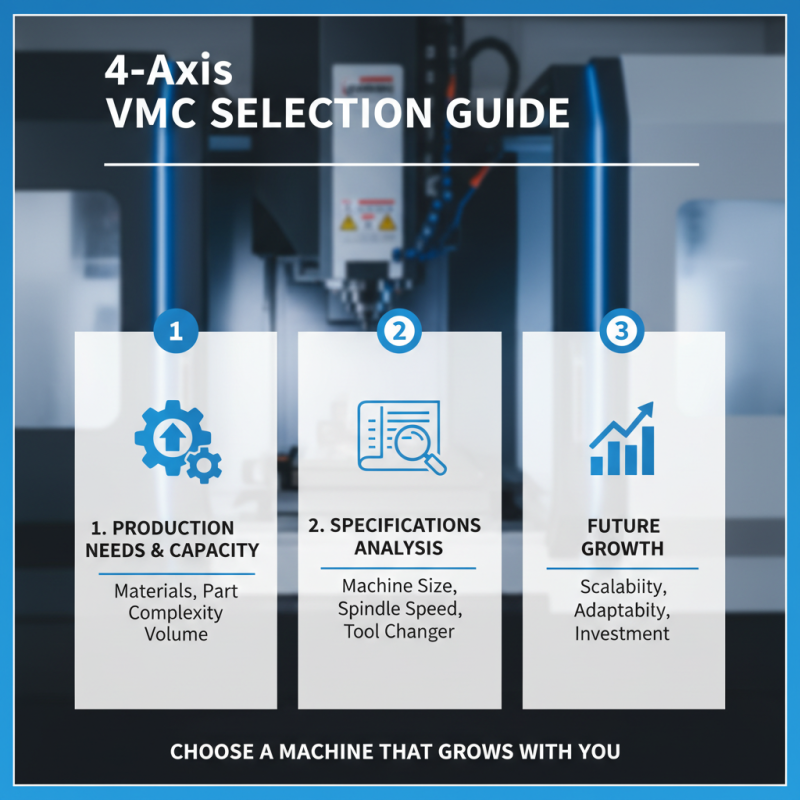
When choosing the best 4-axis CNC vertical machining center, assessing your production needs and capacity is crucial. Understanding the types of materials you will be working with, the complexity of the parts, and the volume of production can help determine the specifications required for your machine. A careful analysis of these factors enables you to select a machine that not only meets your current needs but also has the capacity to grow with your production demands.
Next, consider the production environment and workflow. The layout of your shop and the integration of the CNC machine with existing machinery can significantly impact efficiency. If your production capacity is expected to increase, investing in a machine with greater speed and precision can provide long-term benefits. Evaluate the level of automation you desire, as it directly affects productivity and labor costs. By aligning the capabilities of the 4-axis CNC machining center with your specific production goals and workflow requirements, you can optimize both performance and output.
Comparing Costs and Budget Considerations
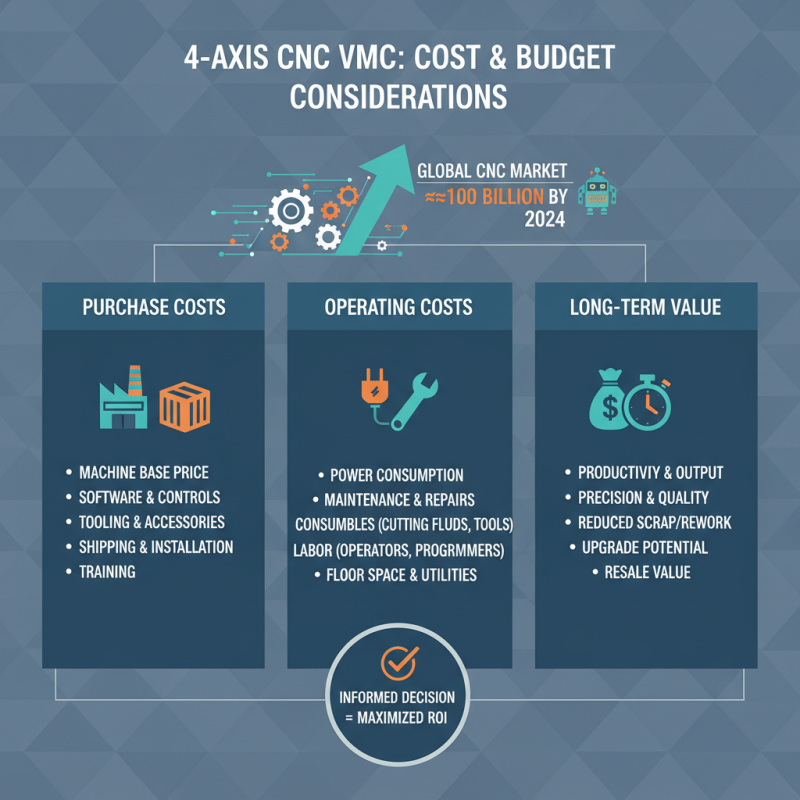
When selecting a 4-axis CNC vertical machining center, cost and budget considerations play a crucial role in the decision-making process. According to a report by the International Federation of Robotics, the global CNC machining market is projected to reach approximately $100 billion by 2024, reflecting an increasing demand for precision manufacturing across various industries. Understanding the different cost structures involved in purchasing and operating a CNC machine is essential for making informed decisions.
The initial purchase price of a CNC machining center varies considerably based on factors such as machine capabilities, size, and technology. On average, high-quality 4-axis CNC vertical machining centers can range from $50,000 to $150,000. Additionally, ongoing operational costs, including maintenance, tools, and software, can account for an additional 10-30% of the initial investment annually. A study by IndustryWeek indicated that neglecting these recurring expenses can lead to underperformance and inefficiency, ultimately affecting project budgets and timelines. Therefore, it is vital to conduct a comprehensive cost analysis to determine the true long-term financial commitment associated with a CNC machining center, ensuring alignment with both operational needs and budget constraints.
Evaluating Manufacturer Support and Warranty Options
When selecting a 4 axis CNC vertical machining center, evaluating the manufacturer's support and warranty options becomes crucial for ensuring long-term satisfaction and operational success. Comprehensive support from the manufacturer can play a significant role in minimizing downtime and maximizing productivity. Prospective buyers should investigate the availability of technical assistance, including whether the manufacturer offers on-site service, remote support, and an extensive database of resources for troubleshooting and guidance. A robust support system can mean the difference between quickly resolving issues and facing prolonged disruptions in production.
Warranty options also warrant careful consideration. A strong warranty signalizes the manufacturer's confidence in their machinery and provides peace of mind to the buyer. It is important to examine the warranty coverage in detail—ensure it includes essential components and is accompanied by clear terms regarding what is required for maintenance and service. Understanding the duration of the warranty, what conditions may void it, and the process for claiming repairs or replacements can significantly impact operational costs. A favorable warranty not only protects the investment but can also serve as an indicator of the overall quality and reliability of the machinery being purchased.