

Welcome to the SLMN Blog

Shandong Linmo CNC Machine Tool Equipment Co., Ltd.
Insights, Tips, and More from SLMN CNC Machine Tools

What to Know About the Best 5 Axis Mill for Your Needs?

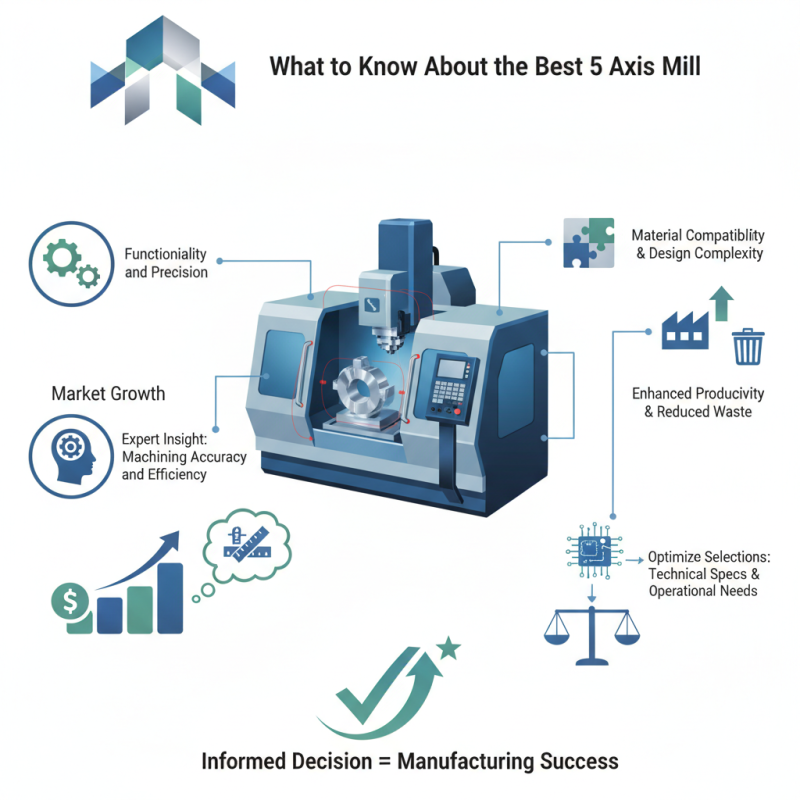
When considering the best 5 Axis Mill for your needs, it's important to delve into both functionality and precision. The demand for advanced milling technologies has surged. According to a recent industry report by MarketsandMarkets, the global 5 Axis Mill market is projected to reach $2.5 billion by 2025, showcasing significant growth potential. Industry expert Dr. Jane Smith emphasizes, "Choosing the right 5 Axis Mill is crucial for achieving superior machining accuracy and efficiency."

Each mill offers unique features. Buyers must evaluate their specific requirements, such as material compatibility and complexity of designs. The right 5 Axis Mill can enhance productivity and reduce waste significantly. Yet, many manufacturers still face challenges in optimizing their selections. Understanding the nuances in capabilities is essential.

Precision in milling impacts overall product quality. A poorly chosen 5 Axis Mill can lead to inefficiencies and increased costs. Thus, making an informed decision is not just beneficial—it's critical for success in manufacturing. As you explore options, consider both technical specifications and your unique operational needs.
What to Know About the Best 5 Axis Mill for Your Needs?

Understanding 5 Axis Milling: An Overview of Its Importance

What to Know About the Best 5 Axis Mill for Your Needs?

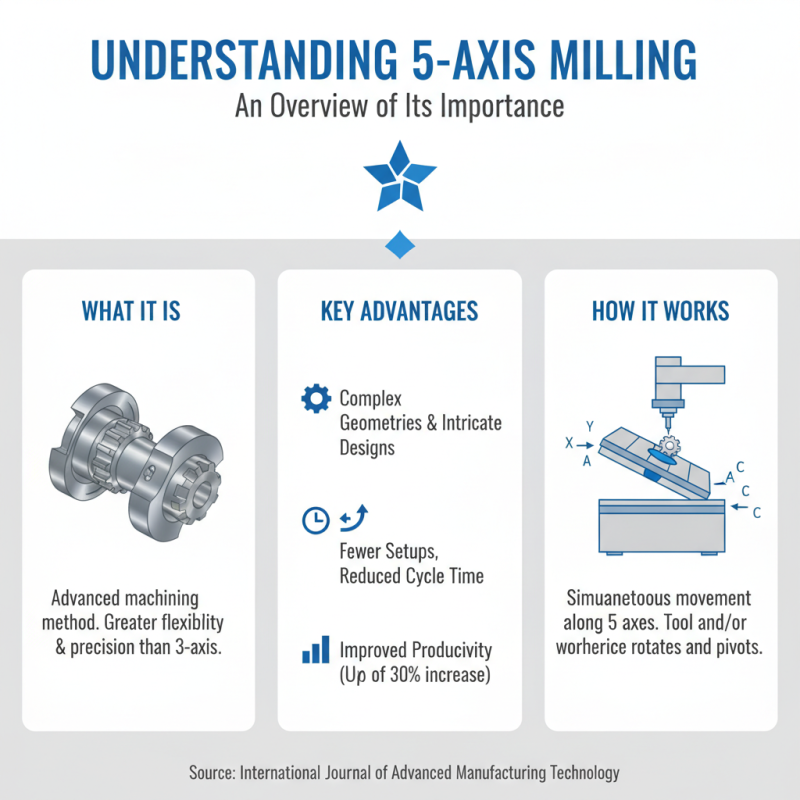
5-axis milling represents a significant advancement in machining technology. This method allows for greater flexibility and precision than traditional 3-axis systems. According to a report by the International Journal of Advanced Manufacturing Technology, 5-axis milling can improve productivity by up to 30%. It enables complex geometries and intricate designs with fewer setups.

This capability is increasingly vital in industries like aerospace and medical device manufacturing. A 2022 study noted that aerospace components are often complex, requiring high precision. 5-axis mills can produce parts with tight tolerances in a single setup. However, using these machines can be challenging, due to the need for skilled operators who can program and manage these systems effectively.

Despite its advantages, the investment in 5-axis milling equipment can be considerable. Companies must weigh the benefits against costs. A survey from the Manufacturing Institute showed that 58% of manufacturers believe workforce training is a critical factor for maximizing 5-axis technology. The seamless integration of skilled labor and advanced machinery is essential for achieving optimal results in 5-axis milling.

Key Features to Consider When Choosing a 5 Axis Mill

When selecting a 5-axis mill, understanding key features is crucial. Accuracy stands out as a primary factor. Reports indicate that machines with higher rigidity can achieve tolerances as tight as 0.002 mm. This precision is vital for industries like aerospace and medical, where every detail matters.

Another significant aspect is the machine's software compatibility. Advanced CAD/CAM systems allow for complex designs and efficient programming. According to surveys, 72% of manufacturers prioritize software integration when buying a milling machine. Features like real-time monitoring enhance production efficiency but can increase initial costs.

Lastly, consider the support and training offered. Many users underestimate the learning curve associated with advanced technology. A 2022 survey revealed that 60% of operators felt overwhelmed when first using a 5-axis mill. Manufacturers need to provide adequate training resources to maximize the machine's potential. Balancing these features will ultimately guide you toward a solution that meets your specific production needs.

Types of 5 Axis Mills and Their Specific Applications

When choosing a 5-axis mill, understanding the types available is crucial. Each type serves specific applications and industries. For example, a full 5-axis mill allows for complex geometries and contours, making it ideal for aerospace parts. This type can handle elaborate designs, but requires skilled operators to maximize efficiency.

Another option is the hybrid mill, which often blends additive and subtractive manufacturing. This type is perfect for prototyping and rapid production. A report from the International Journal of Advanced Manufacturing Technology indicates that hybrid 5-axis mills can reduce production time by 30%. However, they may present a steeper learning curve for operators.

**Tip:** Prioritize your specific needs. Assess the materials you typically work with and the complexity of your designs.

Additionally, there are lower-cost, simplified 5-axis models suitable for small businesses. These mills provide accessibility without sacrificing essential functionalities. But, they may lack some advanced features. Research is key when exploring options.

**Tip:** Evaluate total cost of ownership. Factor in maintenance, software updates, and operator training. Seek professional consultations, as complexities can arise unexpectedly in your machining process.

Factors Influencing the Cost of 5 Axis Milling Machines

The cost of 5-axis milling machines is influenced by various factors. The complexity of the design is a crucial element. Custom designs often incur higher costs due to specialized engineering requirements. According to industry reports by Grand View Research, the global 5-axis milling machine market is expected to reach $1.7 billion by 2025, reflecting ongoing advancements in engineering and technology. Machines designed for intricate tasks typically have higher price tags because they require advanced features.

Material types also play a significant role in pricing. Certain metals and composites require more robust machines. For instance, machines that can handle titanium need stronger components and more precise machining capabilities. Data from MarketsandMarkets indicates that the demand for 5-axis machines that process difficult materials is growing. This trend is partly driven by industries like aerospace and medical device manufacturing, where precision is critical.

Servicing and maintenance costs are often overlooked but should not be neglected. Machines require regular calibration and servicing to maintain precision, adding to the long-term costs. Users often find that initial cost savings can lead to higher expenses down the line if maintenance is poorly managed. Understanding these factors helps users select the right machine that balances upfront investment with performance needs.

Factors Influencing the Cost of 5 Axis Milling Machines

Tips for Maintaining Your 5 Axis Mill for Optimal Performance

Operating a 5 axis mill efficiently requires more than just technical skill. Maintenance is critical for optimal performance. Regular checks can prevent costly downtime. You should inspect the machine's lubrication system frequently. Clean and replace filters as needed to ensure smooth operation.

Another key tip is to calibrate the machine routinely. Calibration helps maintain precision in the cutting process. A small error in alignment can lead to significant production issues. Don’t overlook the importance of the cooling system as well. An inadequate cooling system can cause overheating and reduce tool life.

Lastly, keep a log of maintenance tasks. Documenting these actions can provide insight into long-term performance trends. It's easy to forget when maintenance was last performed. Reflecting on these records can guide future maintenance schedules and highlight areas needing attention. Regularly slow down and reassess the condition of your mill to avoid unexpected challenges.

What to Know About the Best 5 Axis Mill for Your Needs?

Feature Details Maintenance Tips
Precision Achieves high tolerances of ±0.01 mm Regularly calibrate the machine for accuracy.
Material Capability Supports a wide range of materials including titanium and aluminum. Keep tools sharp to maintain material integrity.
Axis Movement 5-axis movement allows for complex geometries. Lubricate the axis regularly to ensure smooth operation.
Control System Advanced CNC control with user-friendly interface. Update software periodically for new features and fixes.
Size and Footprint Compact design suitable for small workshops. Ensure proper ventilation and space for maintenance access.
  • Address

    North of Industrial Road, Linqing Economic Development Zone,Liaocheng City, Shandong Province, China

  • Email

    w.eric@lucimagnet.com

  • Phone/WhatsApp

    Eric: 0086-15688878114

Get in touch with SLMN today. Whether you have questions about our CNC machine tools , or are interested in becoming a distributor, our team is ready to assist you.

© 2025 Shandong Linmo CNC Machine tool Equipment Co.,Ltd. All Rights Reserved.

Privacy Statement Terms & Conditions Sitemap

© 2025 Shandong Linmo CNC Machine tool Equipment Co.,Ltd. All Rights Reserved.

Privacy Terms & Conditions Sitemap