


In 2026, global manufacturers need more than impressive machine specifications. They need stable production, predictable costs, and responsive technical support. A modern 5 Axis Cnc Machining Center can reduce setups, improve access to complex surfaces, and shorten production cycles. However, performance depends on more than axis count.
This guide examines five leading machining centers for international buyers. It considers spindle speed, torque, working envelope, rotary-table accuracy, control systems, and thermal stability. It also reviews automation options, energy use, operator accessibility, and maintenance requirements. These details matter on a busy factory floor, where a few seconds per part can influence monthly output. Tool changes, chip evacuation, and calibration routines deserve equal attention.
Real-world purchasing also involves risk. Published accuracy figures may reflect controlled test conditions, not every production environment. No ranking is flawless. Some conclusions remain conditional. A machine with exceptional speed may require costly tooling or advanced programming skills. Another model may offer slower cutting but stronger local service and easier training. Buyers should verify test-cut results, warranty terms, installation requirements, and spare-parts availability before signing an order.
The recommendations in this article follow practical engineering criteria rather than promotional language. They are designed for aerospace, automotive, medical, mold-making, and general precision applications. Each selection balances capability, reliability, operator experience, and long-term value. The best choice is rarely the most expensive machine. It is the model that consistently matches your materials, tolerances, production volume, and support network. Examine the details carefully. That is where sound investment decisions begin.
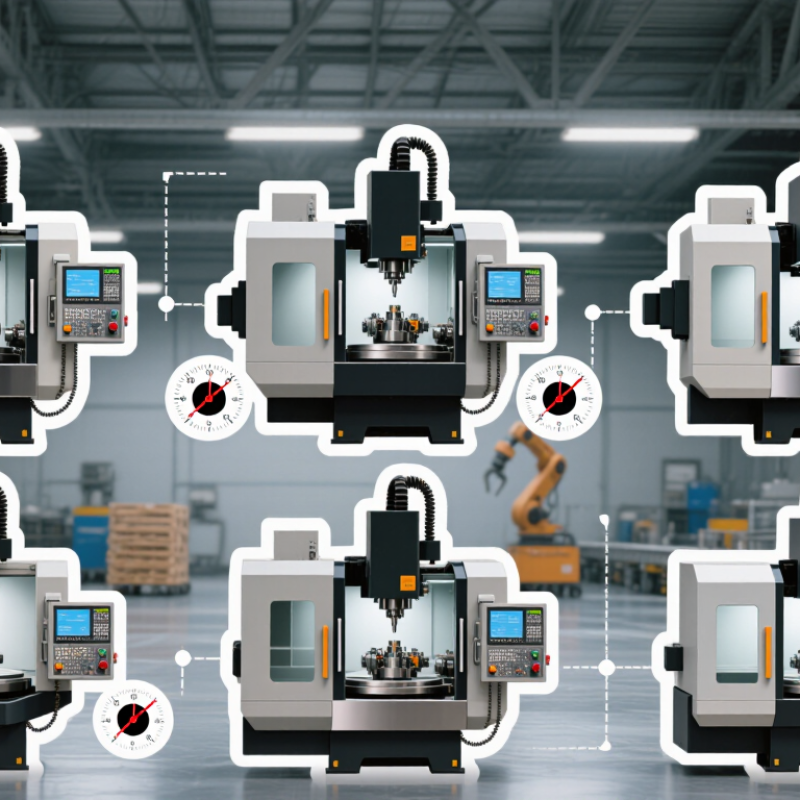
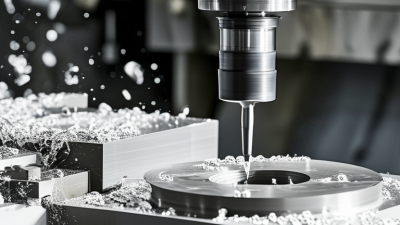
A 5-axis CNC machining center moves a cutting tool along three linear axes: X, Y, and Z. Two rotary axes, such as A, B, or C, tilt and rotate the workpiece or spindle. This movement lets the tool reach complex surfaces from several directions. Unlike a three-axis machine, it can reduce repeated clamping and preserve alignment between features.
There are two common operating methods. A 3+2 machine positions the rotary axes, then cuts with three linear axes. A simultaneous 5-axis machine moves all five axes during cutting. This matters when producing turbine blades, medical components, molds, or parts with deep angled cavities. It can shorten setups and improve surface continuity. The machine still needs accurate calibration, rigid fixturing, and reliable toolpath simulation. It is not magic.
Market demand supports this shift. Fortune Business Insights valued the global CNC machine market at 83.08 billion dollars in 2023 and projects 128.86 billion dollars by 2032. Its forecast indicates continued investment in automated precision manufacturing. The International Federation of Robotics reported 541,302 industrial robot installations worldwide in 2023, showing broader factory automation growth. These figures do not measure 5-axis centers alone, so buyers should avoid treating them as direct sales data. From practical machining experience, cycle time is only part of the decision. Spindle access, rotary-axis accuracy, controller functions, service response, and operator training often determine real productivity. Setup matters.
A 5-axis CNC machining center controls three linear axes and two rotary or tilting axes at the same time. This configuration allows the cutting tool to approach a workpiece from multiple directions, reducing setups and improving access to complex surfaces. The specifications below represent practical machine categories for global buyers rather than specific brands or models.
| Machine Category | Typical 5-Axis Configuration | Recommended Work Envelope | Typical Table Load | Spindle Speed Range | Typical Spindle Power | Positioning Accuracy | Best-Suited Applications | Key Buyer Considerations |
|---|---|---|---|---|---|---|---|---|
| Compact Simultaneous 5-Axis Center | Trunnion table with rotary and tilting axes integrated into the worktable | Approximately 300–600 mm in X, 300–500 mm in Y, and 250–450 mm in Z | 150–500 kg | 8,000–20,000 rpm | 11–22 kW | About ±0.005–0.010 mm, depending on machine size and test standard | Small aerospace components, medical parts, impellers, precision molds, and prototype production | Requires limited floor space; prioritize rotary-axis rigidity, collision avoidance, tool access, and thermal stability |
| High-Speed Mold and Die Center | Swivel head with a rotary table or dual-axis rotary head for continuous tool orientation | Approximately 500–900 mm in X, 400–700 mm in Y, and 400–700 mm in Z | 300–1,000 kg | 12,000–30,000 rpm | 15–30 kW | About ±0.003–0.008 mm under controlled operating conditions | Complex molds, automotive tooling, electrodes, turbine blades, and sculptured surfaces | Look for high-speed spindle bearings, short acceleration and deceleration times, efficient chip evacuation, and advanced surface-finishing functions |
| Medium-Duty Universal 5-Axis Center | Tilting rotary table, swivel head, or combined head-table arrangement | Approximately 600–1,200 mm in X, 500–900 mm in Y, and 500–900 mm in Z | 500–2,000 kg | 6,000–15,000 rpm | 18–45 kW | About ±0.005–0.012 mm | General precision machining, energy components, hydraulic parts, machine components, and multi-face production | Offers a balanced combination of flexibility, cutting power, and working volume; verify rotary-axis torque, table diameter, and automatic tool-change capacity |
| Heavy-Duty 5-Axis Machining Center | Large rotary table, large tilting table, or dual-axis head designed for high-load cutting | Approximately 1,000–2,500 mm in X, 800–1,800 mm in Y, and 700–1,500 mm in Z | 1,500–10,000 kg | 3,000–10,000 rpm | 30–75 kW | About ±0.008–0.020 mm | Large aerospace structures, industrial machinery, energy equipment, heavy molds, and large castings | Foundation requirements, floor loading, rotary-axis bearing capacity, chip removal, coolant filtration, and service access are critical |
| Mill-Turn 5-Axis Center | Three linear milling axes combined with a CNC turning spindle and one or two milling rotary axes | Approximately 500–1,000 mm in turning diameter and 700–2,000 mm in machining length | 300–2,500 kg, depending on chuck, tailstock, and part length | 3,000–12,000 rpm for milling; turning spindle speed varies by chuck and workpiece diameter | 15–45 kW | About ±0.005–0.015 mm | Complete machining of shafts, impellers, valve bodies, nozzles, and parts requiring turning and angled milling | Can reduce multiple setups and transfer errors; evaluate spindle bore, chuck size, bar capacity, synchronization, and software for mill-turn operations |
Specification note: Actual performance depends on machine structure, axis travel, workpiece weight, cutting conditions, control system, tooling, temperature, installation quality, and the applicable accuracy test standard. Buyers should request certified test results and application samples before making a final purchase decision.


North of Industrial Road, Linqing Economic Development Zone,Liaocheng City, Shandong Province, China
w.eric@lucimagnet.com
Eric: 0086-15688878114
Surface Grinder Machining Center CNC Lathe Machine Boring and Milling Machines
Semiconductor Optics Automobile Molding Construction Machinery Shipping Aerospace Valve Industry Wind Power Industry Abrasives Industry Refractory Industry Ceramic Seal Industry Bearings Industry
Company Patent Certificates Factory Tour Team Member Our Partner Our History Real-time Factory Inspection R&D Strength Terms & Conditions Privacy Statement


© 2025 Shandong Linmo CNC Machine tool Equipment Co.,Ltd. All Rights Reserved.